The 2014 through 2018 information is copy past from last year's two summary posts. 2019 year review is newly types summarizing this years progress both in blog and writing projects.
Summer of 2014
Everything really began in 2014 when during the summer I came across NaNoWriMo. Sometime around the mid or late summer I decided to try writing a novel during November. I remember checking out several books and taking notes on how to write novels.
I created Song and Fire, a short novel set in a world that I called the Ea, the World of the Fifth Sun.
2015
For a more complete look at 2015 summary, see my 2016 year end review of 2015 post.
I remember revising Song and Fire during January of 2015. While this first novel only sold a few copies, it spurred me to return to tabletop RPGs after 20 years. This book's mythology is that Ea is on the third planet on the fifth sun or 'sol' in a series of worlds, each proceeding world having been destroyed in a war of gods. I can actually easily move this story into an Aioskoru human region if I wanted to.
I began World of the Fifth Sun blog on March 13, 2015.
I created several documents which would inspire generator and engine products this year in 2018.
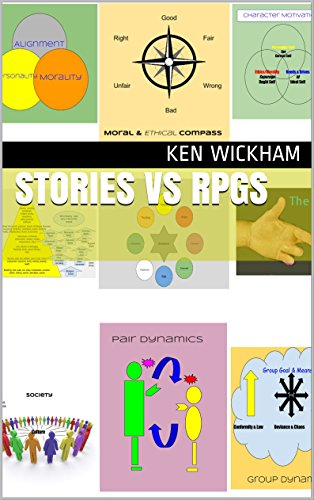
Much of my Character Generator and flaws was initially created in the Stories vs RPGs series and resulting book.
July of 2015 my nephew in my family was tragically killed by a drunk driver.
I began my Rolemaster beta testing experience around this time as well.
In October, I began creating Aioskoru.
October 28 I began trying to build Aioskoru using online random content generators and learning to expand map techniques.

November I wrote my 2nd novel, a collection of short stories for the World of the Fifth Sun which resulted in two of the short stories being released Worn and Lanic. Although only those two stories were ever published in one small volume, I still have the remaining stories unedited in my collection. I might be able to do something in the future with this old unreleased content.
I ended the year with more map creation techniques which resulted in techniques used in Quick free maps series and book in 2016.
2016
2016 began by finishing my map making techniques.
I then switched to fantasy constructed languages.
Dice, card, and probability brought me to ABS12 creation series. This was actually my 3rd RPG game attempt after a WotFS Fudge and FAE versions which are actually inspirations for One-Roll Fudge RPG, which were never published anywhere. While A Basic System 12 (ABS12) V1.08 may not be great in it's entirety, pieces of that game are great and are actual pieces such as the Plot Generator and Fact Generator.
In mid 2016 summer, I began selling products on DriveThru and RPGNow. First, maps were my topic. It quickly switched to Aioskoru and the Solo Game Engine and Fact Generator (which are pieces of ABS12).
In late that year, I began creating Fairy language, which is a test into the possible content of books such as Elvish Language. I've had words written for Elvish since earlier this 2016 year but have changed much of it in it's current form. It is based, however, on the same words. Fairy would be published first since I knew that I owned the rights to this invented language.
5e x 5 was really the emphasis at the end of this year 2016.
Comparing open gaming systems during this year also fueled my more recent Parallel Open Gaming Systems products.
2017
2017 began by finishing 5e x 5 products for a few months. Later, Character Gen (based on Stories vs RPGs) vs, Description Gen (item focus), and Motivation Gen (based on Stories vs RPGs) were released.
In the blog, I began with finishing my Fairy Language which I would release a year later in PDF.
My Aioskoru Myth Making series created early 2017 has yet to be published anywhere except on my blog.
The Star Frontiers blog series helped inspire me to complete 5e x 5 Future Characters later during the year.
In the middle of the year 2017, my MERP Collectors Edition series helped to quench my RMX anger.
2018
During the month of November, I completed a project to writing a game system and setting. One-Roll Fudge RPG and an unreleased Aioskoru setting was created during this month. This setting information hopefully will provide inspiration and direction in the future. It certainly felt fulfilling to write some fiction after a few years of rules and list creation, which are satisfying in a different way.
I've established a small presence on MeWe for social media.
During the month of December, I began and haven't finished yet a story generating series using Story Mechanisms. This series I plan to continue into January of 2019.
I wanted to get some hands on experience with other Fudge systems. This series I plan on continuing into 2019.
I sort of continued a MERP series that I started a few years ago with this possible new series. I don't know how much more I can sustain this series. It is ranked lower on my priority since these products are rather old and low priority. I did learn a lot about myself already from this initial comparison.
2019
October saw the release of the fourth book in the mechanisms series, Environmental Mechanisms. Environmental Mechanisms is the result of one year of RPG tool development focusing on setting generating tools. While some of the tools are from 2018, all of the terrain tools found in the Minimalist Descriptive series were created in 2019. Setting tools became the main focus of 2019.
A few products were expanded upon and released in a 2nd edition in 2019. The solo game engine, fact generator, description generator, and the very fun to make d100 Gamemaster Surrogate-100 Shades of Nay...and Yea were released in 2019.
Orcish Language, the third Aioskoru Language, was released in 2019.
Combat tools such as the minimalist martial arts, minimalist combat, and the critical charts were released in 2019.
During the summer, this blog focused on writing qualities, innovation, and grammar.
Early summer, June, focused on flash fiction using Flash RPG.
5e x 5 saw two modern book releases—Modern Backgrounds and Modern Races.
So, 2019 was about parts of speech, setting/terrain, combat, and 2nd editions primarily
