Showing posts with label Minimalist Descriptive. Show all posts

Sunday, December 27, 2020

World of the Fifth Sun progress 2014 to 2020

 The 2014 through 2019 information is copy past from last year's two summary posts. 2020 year review is newly types summarizing this years progress both in blog and writing projects.

Summer of 2014

Everything really began in 2014 when during the summer I came across NaNoWriMo. Sometime around the mid or late summer I decided to try writing a novel during November. I remember checking out several books and taking notes on how to write novels.

I created Song and Fire, a short novel set in a world that I called the Ea, the World of the Fifth Sun.

2015

For a more complete look at 2015 summary, see my 2016 year end review of 2015 post.

I remember revising Song and Fire during January of 2015. While this first novel only sold a few copies, it spurred me to return to tabletop RPGs after 20 years. This book's mythology is that Ea is on the third planet on the fifth sun or 'sol' in a series of worlds, each proceeding world having been destroyed in a war of gods. I can actually easily move this story into an Aioskoru human region if I wanted to.


I began World of the Fifth Sun blog on March 13, 2015.

I created several documents which would inspire generator and engine products this year in 2018. 


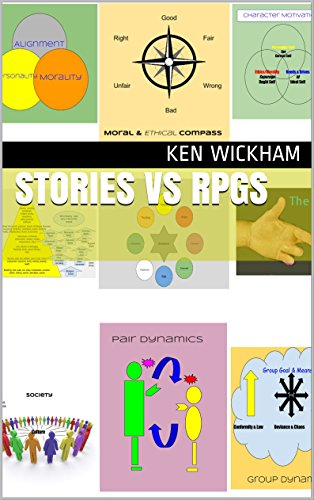
Much of my Character Generator and flaws was initially created in the Stories vs RPGs series and resulting book.

July of 2015 my nephew in my family was tragically killed by a drunk driver.

I began my Rolemaster beta testing experience around this time as well.

In October, I began creating Aioskoru.

October 28 I began trying to build Aioskoru using online random content generators and learning to expand map techniques. 

November I wrote my 2nd novel, a collection of short stories for the World of the Fifth Sun which resulted in two of the short stories being released Worn and Lanic. Although only those two stories were ever published in one small volume, I still have the remaining stories unedited in my collection. I might be able to do something in the future with this old unreleased content.

I ended the year with more map creation techniques which resulted in techniques used in Quick free maps series and book in 2016.


2016

For a more complete look at 2015 summary, see my 2016 year end review of 2016 post.
2016 began by finishing my map making techniques. 

I then switched to fantasy constructed languages. 

Dice, card, and probability brought me to ABS12 creation series. This was actually my 3rd RPG game attempt after a WotFS Fudge and FAE versions which are actually inspirations for One-Roll Fudge RPG, which were never published anywhere. While A Basic System 12 (ABS12) V1.08 may not be great in it's entirety, pieces of that game are great and are actual pieces such as the Plot Generator and Fact Generator

In mid 2016 summer, I began selling products on DriveThru and RPGNow. First, maps were my topic. It quickly switched to Aioskoru and the Solo Game Engine and Fact Generator (which are pieces of ABS12).

In late that year, I began creating Fairy language, which is a test into the possible content of books such as Elvish Language. I've had words written for Elvish since earlier this 2016 year but have changed much of it in it's current form. It is based, however, on the same words. Fairy would be published first since I knew that I owned the rights to this invented language.

5e x 5 was really the emphasis at the end of this year 2016.

Comparing open gaming systems during this year also fueled my more recent Parallel Open Gaming Systems products.


2017


2017 began by finishing 5e x 5 products for a few months. Later, Character Gen (based on Stories vs RPGs) vs, Description Gen (item focus), and Motivation Gen  (based on Stories vs RPGswere released. 

In the blog, I began with finishing my Fairy Language which I would release a year later in PDF.

My Aioskoru Myth Making series created early 2017 finally was published in 2020.

The Star Frontiers blog series helped inspire me to complete 5e x 5 Future Characters later during the year. 

2018

During the month of November, I completed a project to writing a game system and setting. One-Roll Fudge RPG and an unreleased Aioskoru setting was created during this month. This setting information hopefully will provide inspiration and direction in the future. It certainly felt fulfilling to write some fiction after a few years of rules and list creation, which are satisfying in a different way.

I've established a small presence on MeWe for social media.

During the month of December, I began and haven't finished yet a story generating series using Story Mechanisms. This series I plan to continue into January of 2019.

I wanted to get some hands on experience with other Fudge systems. This series I plan on continuing into 2019.

[I sort of continued a MERP series that I started a few years ago with this possible new series. I don't know how much more I can sustain this series. It is ranked lower on my priority since these products are rather old and low priority. I did learn a lot about myself already from this initial comparison.
Series Retired]


2019


During November and December, I created the Grammar Fuel series. The blog has several posts supporting and using these new tools and tables.

October saw the release of the fourth book in the mechanisms series, Environmental MechanismsEnvironmental Mechanisms is the result of one year of RPG tool development focusing on setting generating tools. While some of the tools are from 2018, all of the terrain tools found in the Minimalist Descriptive series were created in 2019. Setting tools became the main focus of 2019.

A few products were expanded upon and released in a 2nd edition in 2019. The solo game engine, fact generator, description generator, and the very fun to make d100 Gamemaster Surrogate-100 Shades of Nay...and Yea were released in 2019.

Orcish Language, the third Aioskoru Language, was released in 2019.

Combat tools such as the minimalist martial arts, minimalist combat, and the critical charts were released in 2019.

During the summer, this blog focused on writing qualities, innovation, and grammar.

Early summer, June, focused on flash fiction using Flash RPG.

5e x 5 saw two modern book releases—Modern Backgrounds and Modern Races.

So, 2019 was about parts of speech, setting/terrain, combat, and 2nd editions primarily

2020


The early part of the year was mainly finishing the Grammar Fuel series that resulted in the Grammar Fuel: Parts of Speech and Grammar Fuel: 12,000 Phrases & Idioms, two tools for the dialogue creation.

In the blog, the first few posts of the year were creating an environment using Environmental Mechanisms and then a post using the Dialogue Engine.

I released 9 previously unreleased draft posts with commentary.

At that time I also began the sub Reddit https://www.reddit.com/r/Solo_RPG_Tools/, which is where I've generated the new Coin Solo RPG System. Using that new system, I created the first adventure "The Art of Love and Loss".

I then did a 12 part series "Learning about Poetry" on this blog.

My Flash Fiction day project was "Necromancer Takes on the World".

Micro Dungeon Room Map Generator was released in the summer.

The American Name Fuel series was published.

Minimalist d6 Solo Game Engine & Adventure Seed Engine were combined.

Elvish Language received an update.

On the subreddit, I started a second Coin Solo RPG System adventure currently on the 13th session, yet to be named.

Essential SoRoPlay GamTools was published.

Minimalist Descriptive Urban and Minimalist Descriptive Rural were published.

Theme Generator 2e was published.

For a zine, I published currently six issues beginning with Coin Solo RPG System, Myths and Fables, Learning About Poetry, Horror Ref, Fantasy Ref, and Christmas Ref.

So, 2020 was about finishing parts of speech, phrases & idioms, dialogue, poetry, fundamentals, American names, urban/rural, expanding themes, and creating the zine.

Sunday, September 13, 2020

Minimalist d6 Solo Game and Adventure Seed Engines available

Minimalist d6 Solo Game & Adventure Seed Engine

Minimalist d6 Solo Game & Adventure Seed Engine
Available at two places: one a PDF or one for Kindle
A PDF @ DriveThruRPG
For Kindle (US) @ Amazon.com, (UK) @ Amazon.co.uk, (DE) Amazon.de.

A combined version sold in two different formats at two different eBook vendors that brings the two prior published toolsets together, is now available.
  • Bundled version includes separate books and combined book @ DriveThruRPG 

For a reference on how these combined tools may be expanded, replaced, or furthered, see the prior post "An overview of some of the tools that I've created."

Minimalist d6 Solo Game Engine is a collection of tools, referred to as functions, that help you to play a solo game using standard six-sided dice. It works by generating either answers to questions, icon images, or keyword prompts for interpretation.

Minimalist Adventure Seed Engine is included in this version as a companion tool to be used with this book to create random story conflict, foe, theme, motivation, and twists.
You need a gaming system character and resolution mechanics with this book in order to create characters, have NPC and creature stat-blocks, and resolve game mechanics. This book focuses on generating narrative content using questions and keyword prompts. Some other game mechanics tools that can be used for some game mechanics are Minimalist Descriptive Combat (mass combat) and/or Remnant RPG Tools (descriptive roleplaying combat) which includes the Minimalist Descriptive Skills (descriptive d6 skill resolution) along with several other related tools.

A gamemaster has many functions. This set of tools focuses on six GM functions.
    • The gamemaster surrogate engine focuses on the function of giving four types of closed ended questions: yes/no, task progress, problem solving, and scientific method answers to help create story, characters, and setting.
    • The iconic fact generator focuses on the function of giving random sensory-based icon images that may represent answers to open ended questions to help create a setting based on the player character’s perception.
    • The indoor, outdoor, item Gen focuses on function of giving random keywords to be used as word prompts to help generate setting based on adjectives and determiners.
    • The relationship, mood, emotion, & encounter Gen focuses on the function of giving human and creature description based on description, mood, emotions to help create story encounters.
    • The NPC scene action (AI) focuses on the behavioral function of non-player character (NPC) or even creatures actions within a scene.
    • The Gamestory Adventures process focuses on the steps to create a narrative like the opening scene, inciting event, one or more conflicts, and until completion or failure.

This PDF version includes the Minimalist Adventure Seed Engine at the back of the eBook.
  • This is a minimalist adventure seed engine to help randomly roll story seeds for gaming or writing.
  • Easy, standard d6 dice system that may be used with any core system.
  • It is uses a small amount of keywords to describe an adventure story.

Sunday, August 16, 2020

An overview of some of the tools that I've created.

An overview of tools, bundles, and volumes

[This post might serve as the foundation to a product page or series for the blog. This post may be edited, expanded, and altered in the next few days or oncoming future.]

Many Tools, but how do you know what is what?

There are many tools created for different purposes or functions—tools for different tasks. Originally, each of the tools were created separately, each for a specific function.

As for the tools, all are available individually and separately, which is good if you want to only get what is needed.

•The separate tools may end in "...generator", "...engine", "...critical", and/or "...communicator".
•One d6 tool series of tools focusing on description begins with "Minimalist..." and/or "Minimalist Descriptive...".
•Very large generating tables of random words (by part of speech), names, or phrases (or idioms) for creating NPC dialogue, among other uses, have titles ending in "...Fuel".

The generators provide a 12x12 (144+ results) categorized, and sometime subcategorized, table of keywords or key-phrases — to help inspire content creation. The keywords to help create plots, emotions, animals, human description, body language, indoor setting, outdoor setting, sensory facts, twists, dreams, fears, scene actions, themes, knowledge, etc....
The engine takes in information and creates a usable output of words, decisions, suggestions, or guidelines. 

The minimalist descriptive is a set of d6 charts focusing on one aspect of a game world used to create one or a few sentences sentence made up of keywords and facts describing the most important features of a certain setting or terrain or phenomenon. They create a brief description of an environmental setting, using features found on Earth, used to set up a scene and to put NPCs, creatures, objects, and action.

The Grammar Fuel: [part of speech] is a solo RPG resource random table tool made for tabletop RPG gaming using d1,000, d100, d20, d10, or d6 depending on the table, which brings together the 2,000 verbs, 2,000 nouns, 2,000 adjectives, 1,000 adverbs, 1,000 interjections, 250 prepositions, 100 pronouns, 100 subordinating conjunctions, 100 determiners, 20 correlative conjunction pairs, 8 coordinating conjunctions, and 5 article/plural combinations. So, it is like a 8,583 random word table divided by part of speech. However, speaking styles influence which words are generated somewhat.

Grammar Fuel: [phrases and/or idioms] is a 12,000 phrases and idioms on 12 tables alphabetized and numbered for d1000 rolls. The idioms are mostly American English based.

The critical tables describe combat damage to a person in terms of wound penetration and bodily location.

Most tools also are found in bundled collections, which may or may not contain a single-volume collection—collections that are mostly topical.

Most also are found gathered together into somewhat topical collections of tools—volumes, called "...Mechanisms", "...All-in-One", "Grammar Fuel:...", and "Complete..."

Recommended Beginning Tools

Where is a good place to start? 

Currently, two or three tools are what I consider fairly simplified foundational tools, sometimes different than the 1e or 2e tools. The Minimalist d6 Solo Game Engine and the Minimalist Adventure Seed Engine. And from these two minimalist tools, additional tools may either expand upon or do things slightly different than this foundation which will answer the question, "After these two tools, where could you go from there?" which will be answered in the next section, How do you  expand or use alternatively to the two basic minimalist tools?

1. Minimalist d6 Solo Game Engine


Minimalist d6 Solo Game Engine

Minimalist d6 Solo Game Engine is a collection of tools that help you to play a solo game using standard six-sided dice. It works by generating either answers to questions, icon images, or keyword prompts for interpretation.

Minimalist Adventure Seed Engine is recommended as a companion tool to be used with this book to create random story conflict, foe, theme, motivation, and twists.

Note: You need a gaming system character and resolution mechanics with this book in order to create characters, have NPC and creature statblocks, and resolve game mechanics. This book focuses on generating narrative content using questions and keyword prompts. Some other game mechanics tools that can be used for some game mechanics are Minimalist Descriptive Combat (mass combat) and/or Remnant RPG Tools (descriptive roleplaying combat) which includes the Minimalist Descriptive Skills (descriptive d6 skill resolution) along with several other related tools.


gamemaster has many functions. This set of tools focuses on six GM functions.
    • The gamemaster surrogate engine focuses on the function of giving four types of closed ended questions: yes/no, task progress, problem solving, and scientific method answers to help create story, characters, and setting.
    • The iconic fact generator focuses on the function of giving random sensory-based icon images that may represent answers to open ended questions to help create a setting based on the player character’s perception.
    • The indoor, outdoor, item Gen focuses on function of giving random keywords to be used as word prompts to help generate setting based on adjectives and determiners.
    • The relationship, mood, emotion, & encounter Gen focuses on the function of giving human and creature description based on description, mood, emotions to help create story encounters.
    • The NPC scene action (AI) focuses on the behavioral function of non-player character (NPC) or even creatures actions within a scene.
    • The Gamestory Adventures process focuses on the steps to create a narrative like the opening scene, inciting event, one or more conflicts, and until completion or failure.

2. Minimalist Adventure Seed Engine


Minimalist Adventure Seed Engine

This is a minimalist adventure seed engine to help randomly roll story seeds for gaming or writing.

  • One-page, easy, standard d6 dice system that may be used with any core system.
  • It is small and compact. It's just this black cover page and one written page.
  • It can, however, be expanded by using the 12x12 plots, foes, themes, motivations, mood-emotions, and twists generator charts.
  • It is uses a small amount of keywords to describe an adventure story.

This uses up to six rolls of 1d6.
  1. Roll for the conflict.
  2. Roll for the type of foe.
  3. Roll for the theme.
  4. Roll for the motivation.
  5. Roll for the mood.
  6. Roll, when appropriate, a twist.
The keywords are interpreted based on context of the setting and characters.

What tools expand the number of results or replace with alternatives the Minimalist Adventure Seed Engine? Plot Generator (144 conflict keywords), Foe Generator (144 foe keywords), Theme Generator (144 sets of theme topics), Motivation Generator (144 motive keywords), Mood-Emotion Generator (144 more specific moods or emotions), Twist Generator (144 twist situations described briefly).

How do you expand the number of results or replace with alternatives portions of the two basic minimalist tools?

Several tools offer ways to expand the number of results or use alternatively to the minimalist tools found in the minimalist tools.

1. Minimalist d6 Solo Game Engine expand, replacing with 12x12 (144 result) generator charts and/or game engines

Most of these are found in various Mechanisms all-in-one books or in the character, story, or environmental Bundles.

Alternatives, replacing the GMS engine
Solo Game Engine 1e - This system uses Yes, Maybe, and No type answers expanding the traditional solo game system by adding branching and conditional answers. This is a flexible solo game engine that is meant to take the place of a Gamemaster (GM) for answering questions or finding the results of modified rolls. A chart with results for 1D6, 1d8, Fate, Fudge, 1D10, 1D12, 2D6, 3D6, 1D20, 4D6 JAGS, and 1D100 systems is included. It makes it a versatile game engine.
or
ABS12 Solo Game Engine 2nd Edition - 18 pages, 6 tables, 15 types of results (1e had 5pgs, 1 table, 1 type of result), This is a flexible solo game engine that is meant to take the place of a Gamemaster (GM) for answering questions or finding the results of modified rolls. A chart with results for 1D6, 1d8, Fate, Fudge, 1D10, 1D12, 2D6, 3D6, 1D20, 4D6 JAGS, and 1D100 systems is included.
Gamemaster Surrogate - This is a true d100 solo game engine with 100 answers, more focused for task-resolution questions, that vary in detail and nuance. This list gives you 100 answers to yes or no questions with varying degrees, tangents, beyond expectation, a few types of results, and/or speed of result all in one table—with just one roll. Sometimes answers suggest a reason or cause such as a type of attribute, which may or may not apply to the given situation.

Alternatives, replacing the Iconic Fact Generator
Fact Generator 1e- this focuses on 144 results focusing on sensory and process data.
or
ABS12 Fact Generator 2nd Edition - This 2nd edition expands and includes the 1st edition. 30 pages, 8 charts, 23 types of facts, 10 pages of Senses from Roget's Thesaurus. Compared to the original which was 1pg chart & instructions. It makes it a versatile game engine. This is a fact generator that is meant to aid or take the place of a Gamemaster (GM) for answering questions or finding the clues, information, or describing situations & settings. Eight charts with results for 1D20, 3D6, and d100 systems is included.

Sound Generator - focuses entirely on sounds and onomatopoeia.

Expanding, replacing the Indoor/Outdoor/Item Gen
Description Generator 1e- focuses on description of objects or things using 11 categories of adjectives.
or
Description Generator: Objects 2nd Edition- This 2nd edition expands and includes the 1st edition material. 52 pages, 9 charts, 33 types of facts/descriptions, object describing words from Roget's Thesaurus. [Compared with the original which was 3pg, one chart & instructions, it's greatly expanded.] This is a description generator that is meant to aid or take the place of a Gamemaster (GM) for describing objects in situations & settings. Nine charts with results for 1D20, 3D6, and d100 systems is included

Outdoor Setting Generator - focuses on descriptions of locations or places. This includes biomes, weather, soil types, sparcity, and size.

Indoor Setting Generator focuses on descriptions of rooms and interior locations. This includes rooms types, sizes, adjectives describing rooms, and material found in or used in the construction of the room.

Adding more specific colors
Color Generator & Wheel - This book helps you to use and even roll randomly for 144 color names to  describe more vivid settings. It also has a color wheel to help design 13 types of color combinations. It has color meaning for the 8 main colors. This table shows 12 rows of 12 columns of colors: Black, Cool Grays, Warm Grays, Purple, Pink, Red, Orange & Brown, Yellow, Green, Aqua, Cyan & Turquoise, and Blue. 144 total color names with the actual color background & hexadecimal color #.

Modifier Generator shows modifier categories with 12 or more modifiers for each category including degree, time, contrast, unity, manner, cause-and-effect, and place words.

Expanding, working with on Specific Terrain brief descriptions
Minimalist terrain tools in the Minimalist Series - brief specific terrain descriptions may be generated using the specific minimalist terrain series tools or many of them are found in Environmental Mechanisms. Titles include among many: urban, coniferous forest, deciduous forest, cave, desert, grassland & shrublands, mountains, rainforest, wetlands, forces of nature-air & heat, and forces of nature-ground.
Micro-Dungeon-Room Map Generator - This has two main tables to help generate micro-dungeons, dungeons that are small and created on-the-fly: • 144 Random Rooms (showing the shape and 5ft square dimensions). • 22 Random Hallways (showing the direction, intersection, splitting, or even corners).

Expanding, alternatives, or building upon the Relationship, Mood, Emotion, & Encounter Gen
Mood-Emotion Generator - focuses on 12 categories of emotions or mood: joy, expectation, sadness, confusion, anger, courage, caring, fear, guilty, strong, hurt, and weak. 12 words detail the degree and specify the emotion or mood within each category.

Character Generator - focuses on generating a description of uses nine possible personalities, stat archetypes, encounter types, virtues, vices, and types of quirks on two charts
Human Generator - shows 12 body categories with 12 body description indicators for each category including body shape, hair color, hair style & length, skin color, lip shape, height, facial hair, chest or breast size, eye color, brow shape, eye shape, and nose shape indicators based on worldwide human races.
Social & Mental Traits Generator - This table shows social and mental traits listed in 6 dimensions introvert-extrovert, rebellious-agreeable, carefree-conscientious, neurotic-stable, closed-open, and proud-humble. Each dimension has 12 ranked degrees with two related words per rank to describe a characters mental and social attributes using words.
Physical Trait Generator - This table shows 144 strength, dexterity, and constitution traits listed in 6 dimensions delicate-strong, exhausted-enduring, unhealthy-healthy, unskilled-accurate, clumsy-agile, and slow-quick, with their definitions.
Knowledge Generator - focuses on mental and studied knowledge fields such as science, philosophy, language, literature, military, agriculture, law, politics, religion, social science, and paranormal.
Career Generator - shows most career categories with one to twelve or more careers/classes for each category including information, sports, wealth, philosophy, home, health, psychology, paranormal, religion, history, geography, anthropology, business, social science, politics, law, music, fine arts, art, language, literature, science, medicine, agriculture, technology, and military.
Dream Generator - shows 12 dream word categories with 12 dream word symbols for each category including animal, building/house, vehicle or mount, clothing, body part, color, number, insect, disaster, location, character, and relation words.
Character Flaw Generator - Included are a total 144+ character flaws in the entire table in no particular order.

Animal Generator - focuses on the movement, behavior, attacks, defense, abilities, and living situation and survival features of a real, earth-like, mythical, folklore, made-up or similar alien animals.
Wing Generator - This is a flexible animal generator that is meant to aid or take the place of a Gamemaster (GM) for answering questions or finding the clues, information, or describing wings of animals. This a lists of 144 animal names that have wings or glide (insects, butterflies, dragonflies, birds, water birds, flying fish, flying squid)and flightless birds. It does not show any pictures nor drawings.


Alternatives to the NPC Scene Actions (AI)
Scene Action Generator - This table shows 144+ verbs listed in somewhat order: verbs that do, move,  social, setting, object, and idea - used to describe a scene.

Several of the NPC content below refers to the Character Generator
Character Generator - focuses on generating a description of uses nine possible personalities, stat archetypes, encounter types, virtues, vices, and types of quirks on two charts.

Dialogue & Communication
Dialogue Engine - This dialogue engine helps create dialogue topics, voice qualities, and personality-based dialogue styles for games and stories. This dialogue engine takes into acount 3 moods, 9 personality types, 3 mindsets, and 7 vocal qualities using six-sided dice. It uses the Character Generator, Fact Generator, Motivation Generator, Plot Generator, and Flash RPG. It can also use the Body Language Generator to add non-verbal body language.
Grammar Fuel: Parts of speech is a five-dialogue style engine added to 15 tables alphabetized and numbered for either d6, d10, d20, d100, or d1000 rolls depending on the table, which brings together the 2,000 verbs, 2,000 nouns, 2,000 adjectives, 1,000 adverbs, 1,000 interjections, 250 prepositions, 100 pronouns, 100 subordinating conjunctions, 100 determiners, 20 correlative conjunction pairs, 8 coordinating conjunctions, and 5 article/plural combinations. The parts of speech are mostly American English based. So, it is like a 8,583 random word table divided by part of speech. However, speaking styles influence which words are generated somewhat. However, there are 5 dialogue styles which have different part of speech probabilities: thinking, feeling, doing, discussing, and formal dialogue styles each have different part of speech proportions.
Grammar Fuel: 12,000 Phrases & Idioms is a 12,000 phrases and idioms on 12 tables alphabetized and numbered for d1000 rolls. The idioms are mostly American English based.

Character Communicator - This table shows categorized by archetype or primary stat with twelve functions of communications for each category including summarize, persuade, argue, imagine, advise, instruct, inform, direct, describe, motivate, analyze, and explain.

Behavior Character Behavior Engine - Characters behave and react to stimulus which may be found in the behavior engine. This behavior engine helps create behavior styles for games and stories. This behavior engine takes into account 9 personality types, 3 mindsets, 9 stat archetypes, 9 virtues, and 9 vices. It can use the Dialogue Generator, Motivation Generator, and Character Communicator primarily.

Thinking
Character Thinking Engine - This system shows analytical and intuitive brain thinking for 15 different archetypes: featuring doer, caregiver, skeptic, lone wolf, guardian, striver, seeker, faithful, mediator, shadow, stranger, darkness, body, mind, and soul. In addition, 12 meanings lead to thoughts based on needs which lead to decision question. Decision basis thought questions are cross reference with decision basis listed on the Thinking Generator: cost/benefit, utility, sufficient/generalize, duty/authority, deduce/link, brainstorming, define/exclude, identify/cause-effect, empathy/sympathy, prior belief/fear, assumptions, and groupthink/harmony/dissenting.
Thinking Generator - This table shows mental basis for 15 different archetypes: featuring doer, caregiver, skeptic, lone wolf, guardian, striver, seeker, faithful, mediator, shadow, stranger, darkness, body, mind, and soul. 12 decision basis are cross referenced: cost/benefit, utility, sufficient/generalize, duty/authority, deduce/link, brainstorming, define/exclude, identify/cause-effect, empathy/sympathy, prior belief/fear, assumptions, and groupthink/harmony/dissenting.

Emotional Reaction Generator - This table shows reasons or causes for emotions for 15 different archetypes: featuring doer, caregiver, skeptic, lone wolf, guardian, striver, seeker, faithful, mediator, shadow, stranger, darkness, body, mind, and soul. 12 emotions are cross reference with triggers, action/reaction, and need: joy, anticipation, sadness, anger, courage, love, fear & anxiety, guilt, shame, pride, and humility—the same emotions listed on the Mood-Emotion Generator and Body Language Generator.
Character Reaction Engine - This system shows reasons or causes for emotions for 15 different archetypes: featuring doer, caregiver, skeptic, lone wolf, guardian, striver, seeker, faithful, mediator, shadow, stranger, darkness, body, mind, and soul. 12 meanings lead to reactions based on needs which lead to emotions. Emotions are cross reference with meaning-triggers, reaction, and need listed on the Emotional Reaction Generator: joy, anticipation, sadness, anger, courage, love, fear & anxiety, guilt, shame, pride, and humility—the same emotions listed on the Mood-Emotion Generator and Body Language Generator.
Mood-Emotion Generator - focuses on 12 categories of emotions or mood: joy, expectation, sadness, confusion, anger, courage, caring, fear, guilty, strong, hurt, and weak. 12 words detail the degree and specify the emotion or mood within each category.

Relationship
Character Relationship Engine This system expands the dialogue mood & topic engine to 12 moods (from 3 in dialogue engine). 12 relationship circles each have two behaviors and a set of common goals. The twelve relationship circles are the following: love interest, parent, offspring, extended family, friend, merchant, education, belief/religion, activist, work, service, and membership. These same 12 are the same one that are expanded into 12 archetypes in the prior tool. Relationship Generator. It lists 12 evaluated roles linked to needs, relationship behavior, and social emotions. The 12 evaluated roles are: enemy, despised, victim, unrelatable, alone, obsession, unfamiliar, relatable, wanted, friend, family, and loved one. Mind, body, and soul stats also influence communication preference.
Relationship Generator - This table shows with twelve types of relationships for each circle of friendship including  love interest (spouse), parent, offspring, extended family, friend, merchant, education, belief (religion), activist, work, service, and membership. It generates archetype-like results and also includes shadow, stranger, and darkness columns.


Alternatives to the Gamestory Adventures
Flash RPG is a six-sided dice game intended for solo game play used to create flash fiction, adventure seeds, and background stories. These are extremely small stories. All of the details can be randomly generated or chosen intentionally by the player. The details will only hint at something more than is told in the fiction.
Three Conflict Chain RPG - This book has has 6 sections and around 11 main steps to help flesh out into three conflict in Three Conflict Chain RPG — an expansion to FRPG. In this game 36 story openings, 6 types of inciting events, and three conflicts looked at by asking 6 question-words using the inquest table, and maybe adding a plot twist are used to create series of conflicts explaining what happened to reach the final conflict result.
Deep Dive Engine - To further flesh out the three conflict stories, additional scenes are added using the Deep Dive Engine. In this engine, six kinds of scenes are created randomly: explanation, description, transition, narrative, action, and reaction scenes. This adds further character development, background stories, connects the major conflicts, and can add subplots.
Transition Scene Generator - This table shows  144+ transition words listed in somewhat function order: begin, during, after, compare & clarify, contrast and concession, add, illustrate & introduce, cause & condition & effect, refer & identify, direct & place, flexible & changing focus, and occurrence & resuming - thought a few can be used in many ways.

2. Minimalist Adventure Seed Engine expand, replacing with 12x12 (144 result) generator charts

All of these are found in the Story Mechanisms all-in-one book, the Story Bundle, and Adventure Seed Bundle.
Expanding, replacing the conflict words
Plot Generator - 144 plot keywords based on 12 main sets of plots.

Expanding, replacing the foe words
Foe Generator - This table shows threats with twelve foes for each category including vs monster, vs creature, vs natural disaster, vs ND & epidemics, vs supernatural, vs paranormal, vs enemy personality, vs enemy career, vs society, vs self, vs technology weapons, and vs technology issues. It refers to enemy personality types found in Character Generator and Flash RPG. It refers to enemy careers found in Career Generator. It refers to other tables as well more indirectly.

Expanding, replacing the theme words
Theme Generator - 144 sets of keywords (over 288 keywords) which can be used to find a theme or subject of a scene, session, story, or overarching story.

Expanding, replacing the character motivation words
Motivation Generator - lists 144 character motivations based on the hierarchy of needs, morality system, defense mechanism, and personality temperament.

Expanding, replacing the mood words or describing with body language
Mood-Emotion Generator - focuses on 12 categories of emotions or mood: joy, expectation, sadness, confusion, anger, courage, caring, fear, guilty, strong, hurt, and weak. 12 words detail the degree and specify the emotion or mood within each category.
Body Language Generator - shows 12 emotion categories with 12 body language indicators for each category including eye, nose, face, jaw, mouth, eyebrow, forehead, hand, arm, leg, posture, movement, speed, voice, or gesture indicators based on American culture.

Expanding, replacing the twist description and phrases
Twist Generator - This table shows with six types of reversals: identity, motive, perception, fortune, role, and fulfillment. The reversal twists are also cross-referenced with 6 questions: who, what, when, where, why, and how.

Tuesday, December 31, 2019

World of the Fifth Sun progress 2014 to 2019


The 2014 through 2018 information is copy past from last year's two summary posts. 2019 year review is newly types summarizing this years progress both in blog and writing projects.

Summer of 2014

Everything really began in 2014 when during the summer I came across NaNoWriMo. Sometime around the mid or late summer I decided to try writing a novel during November. I remember checking out several books and taking notes on how to write novels.

I created Song and Fire, a short novel set in a world that I called the Ea, the World of the Fifth Sun.

2015

For a more complete look at 2015 summary, see my 2016 year end review of 2015 post.

I remember revising Song and Fire during January of 2015. While this first novel only sold a few copies, it spurred me to return to tabletop RPGs after 20 years. This book's mythology is that Ea is on the third planet on the fifth sun or 'sol' in a series of worlds, each proceeding world having been destroyed in a war of gods. I can actually easily move this story into an Aioskoru human region if I wanted to.


I began World of the Fifth Sun blog on March 13, 2015.

I created several documents which would inspire generator and engine products this year in 2018. 

Much of my Character Generator and flaws was initially created in the Stories vs RPGs series and resulting book.

July of 2015 my nephew in my family was tragically killed by a drunk driver.

I began my Rolemaster beta testing experience around this time as well.

In October, I began creating Aioskoru.

October 28 I began trying to build Aioskoru using online random content generators and learning to expand map techniques. 

November I wrote my 2nd novel, a collection of short stories for the World of the Fifth Sun which resulted in two of the short stories being released Worn and Lanic. Although only those two stories were ever published in one small volume, I still have the remaining stories unedited in my collection. I might be able to do something in the future with this old unreleased content.

I ended the year with more map creation techniques which resulted in techniques used in Quick free maps series and book in 2016.


2016

For a more complete look at 2015 summary, see my 2016 year end review of 2016 post.
2016 began by finishing my map making techniques. 

I then switched to fantasy constructed languages. 

Dice, card, and probability brought me to ABS12 creation series. This was actually my 3rd RPG game attempt after a WotFS Fudge and FAE versions which are actually inspirations for One-Roll Fudge RPG, which were never published anywhere. While A Basic System 12 (ABS12) V1.08 may not be great in it's entirety, pieces of that game are great and are actual pieces such as the Plot Generator and Fact Generator

In mid 2016 summer, I began selling products on DriveThru and RPGNow. First, maps were my topic. It quickly switched to Aioskoru and the Solo Game Engine and Fact Generator (which are pieces of ABS12).

In late that year, I began creating Fairy language, which is a test into the possible content of books such as Elvish Language. I've had words written for Elvish since earlier this 2016 year but have changed much of it in it's current form. It is based, however, on the same words. Fairy would be published first since I knew that I owned the rights to this invented language.

5e x 5 was really the emphasis at the end of this year 2016.

Comparing open gaming systems during this year also fueled my more recent Parallel Open Gaming Systems products.


2017


2017 began by finishing 5e x 5 products for a few months. Later, Character Gen (based on Stories vs RPGs) vs, Description Gen (item focus), and Motivation Gen  (based on Stories vs RPGs) were released. 

In the blog, I began with finishing my Fairy Language which I would release a year later in PDF.

My Aioskoru Myth Making series created early 2017 has yet to be published anywhere except on my blog.

The Star Frontiers blog series helped inspire me to complete 5e x 5 Future Characters later during the year. 

In the middle of the year 2017, my MERP Collectors Edition series helped to quench my RMX anger.

2018

During the month of November, I completed a project to writing a game system and setting. One-Roll Fudge RPG and an unreleased Aioskoru setting was created during this month. This setting information hopefully will provide inspiration and direction in the future. It certainly felt fulfilling to write some fiction after a few years of rules and list creation, which are satisfying in a different way.

I've established a small presence on MeWe for social media.

During the month of December, I began and haven't finished yet a story generating series using Story Mechanisms. This series I plan to continue into January of 2019.

I wanted to get some hands on experience with other Fudge systems. This series I plan on continuing into 2019.

I sort of continued a MERP series that I started a few years ago with this possible new series. I don't know how much more I can sustain this series. It is ranked lower on my priority since these products are rather old and low priority. I did learn a lot about myself already from this initial comparison.


2019


During November and December, I created the Grammar Fuel series. The blog has several posts supporting and using these new tools and tables.

October saw the release of the fourth book in the mechanisms series, Environmental Mechanisms. Environmental Mechanisms is the result of one year of RPG tool development focusing on setting generating tools. While some of the tools are from 2018, all of the terrain tools found in the Minimalist Descriptive series were created in 2019. Setting tools became the main focus of 2019.

A few products were expanded upon and released in a 2nd edition in 2019. The solo game engine, fact generator, description generator, and the very fun to make d100 Gamemaster Surrogate-100 Shades of Nay...and Yea were released in 2019.

Orcish Language, the third Aioskoru Language, was released in 2019.

Combat tools such as the minimalist martial arts, minimalist combat, and the critical charts were released in 2019.

During the summer, this blog focused on writing qualities, innovation, and grammar.

Early summer, June, focused on flash fiction using Flash RPG.

5e x 5 saw two modern book releases—Modern Backgrounds and Modern Races.

So, 2019 was about parts of speech, setting/terrain, combat, and 2nd editions primarily